Celtic knot motifs in Britain: origins, meanings and where to see them
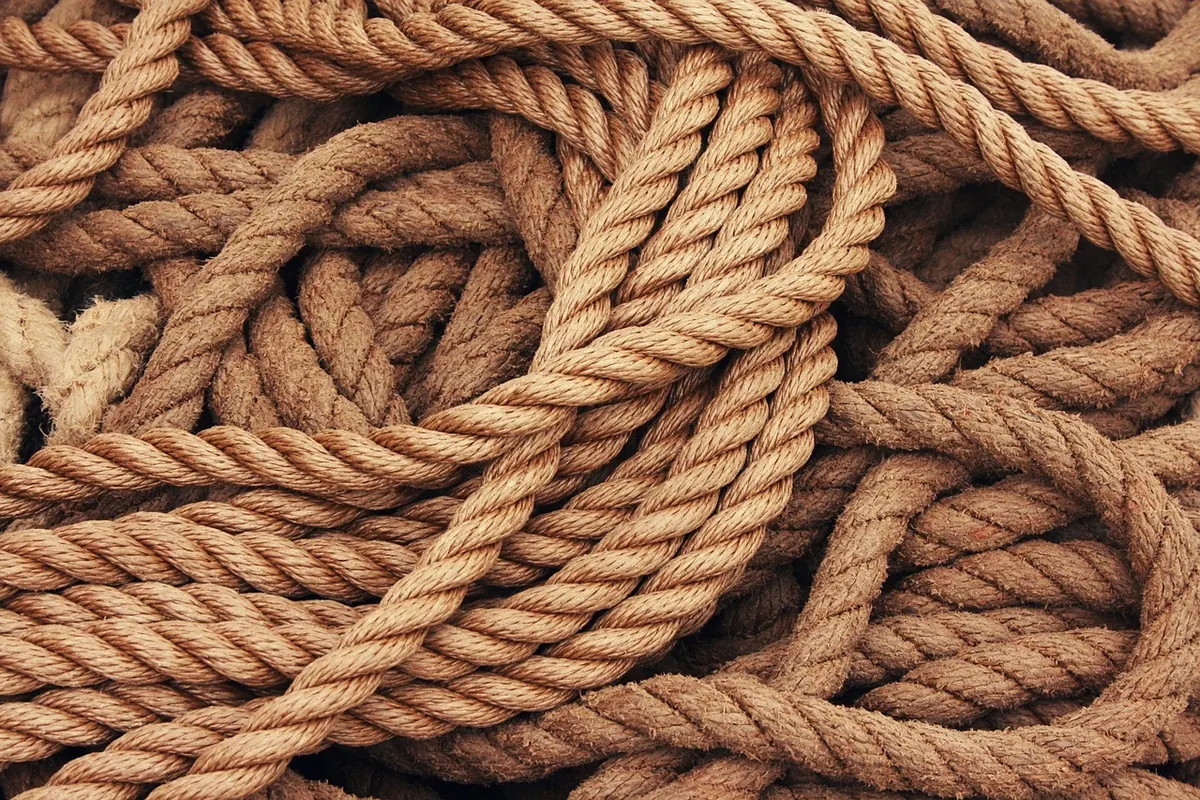
Run your eye along a carved band on a weathered cross and something odd happens. The ribbon dips under its neighbour, surfaces, twists, and meets itself again. There is no start and no finish. That endless loop is the heart of the Celtic knot, and it has been cut into British stone, worked in gold and painted onto vellum for well over a thousand years. It is also one of the most imitated motifs in modern design, and one of the most casually explained.
Interlace is built from a small set of rules. Bands cross in strict alternation, over and under, so the surface reads as woven rather than drawn. Plaitwork, the simplest form, is essentially a braid: three or more strands travelling in a diagonal rhythm. A true knot goes further. Follow one band with your finger and you will eventually arrive back where you started, having passed through every other band on the way. That single unbroken line is what gives the motif its grip on the imagination.
It is worth separating this from older Iron Age art. The swirling metalwork of the pre-Roman Celts — trumpet spirals, leaf buds, faces hidden in scrollwork — is curvilinear and brilliant, but the bands do not weave. True interlacing arrives later, and it belongs to what art historians call Insular art: the shared style of Britain and Ireland between roughly 600 and 900 AD. "Celtic knot" is a convenient modern label for a family of patterns made across these islands, not the signature of one people.
The technique did not appear from nowhere. Interlaced borders run through Roman floor mosaics, Coptic Egyptian textiles and Mediterranean manuscripts, and Germanic craftsmen brought their own taste for tangled animal bodies. Monasteries with continental contacts — Iona off the coast of Mull, Lindisfarne off Northumberland — were the laboratories where these strands met and turned into something new. By the eighth century scribes were filling whole pages with knotwork, and sculptors were carving it in relief on crosses from Cumbria to Angus.
The traffic did not stop there. Viking settlers arriving from the ninth century brought ring-chain patterns and the Borre, Jelling and later Urnes styles, which looped gripping beasts into tight, elegant knots. A cross carved in Cumbria in the tenth century can carry Christian scenes inside Scandinavian ornament, and nobody involved seems to have found that odd.
Here honesty is more interesting than certainty. No medieval writer left us a key, and the knots are probably not a code. What we can say is that they sat in Christian settings — on the margins of gospel books, on the faces of preaching crosses — where a pattern with no end is a natural companion to ideas of eternity. Some scholars read the dense covering of a cross slab or a carpet page as protective, a visual guard against harm. The three-cornered knot now called a triquetra was later glossed as the Trinity, though that reading is medieval rather than ancient.
Many of the meanings sold today are much newer. The love knot, the friendship knot and the Celtic wedding band are products of the Celtic Revival of the late nineteenth century and of twentieth-century design, popularised in part by George Bain's teaching manual Celtic Art: The Methods of Construction, published in 1951. Treat confident symbolic claims with a friendly scepticism. The patterns are beautiful, and that has always been reason enough.
A handful of terms makes gallery labels and guidebooks far easier to follow.
When you meet a complex panel, do not try to take it in all at once. Pick a single band and follow it. Most carvings fall into place the moment you accept that the artist was working with one continuous line, however many times it doubles back.
Carved interlace is where most people meet the motif, and Britain has a remarkable spread of it. The Ruthwell Cross in Dumfries and Galloway and the Bewcastle Cross in Cumbria are both eighth-century works with fine vine scroll, interlace and Latin inscriptions. At Gosforth, also in Cumbria, a tenth-century cross mixes ring-chain knotwork and scenes from Norse myth with the Crucifixion. The two Sandbach crosses in Cheshire stand in the middle of the market square. North of the border, the Pictish slabs at Aberlemno in Angus and the Meigle collection in Perthshire show knotwork at its most mathematical, while Iona's high crosses remain the finest group on the west coast. In Wales, look for the tall Carew Cross in Pembrokeshire and the stones at Nevern.
Because knotwork suits a narrow strip, it flourished in jewellery and fittings. The Pentney hoard — six silver disc brooches found in Norfolk, now in the British Museum — shows Anglo-Saxon craftsmen building patterns from animals at a scale you can cover with a thumb. Filigree, chip-carving and enamel gave the same designs a glitter stone could never match.
Insular gospel books are the other great showcase. The Lindisfarne Gospels, made around 700 and held at the British Library in London, contains carpet pages of astonishing complexity; the library rotates the pages on display to limit light damage. The Lichfield Gospels, an eighth-century book also known as the Book of Chad, is usually on show at Lichfield Cathedral. The Vespasian Psalter and the Book of Deer show how knotwork migrated into the first letter of a psalm or a gospel. Across the Irish Sea, the Book of Kells at Trinity College Dublin is the famous comparison, and worth the journey.
Good places to start, roughly north to south:
Carved interlace is easiest to read in raking light. Visit early or late in the day, or take a small torch and hold it to one side rather than straight on; the low angle throws the bands into relief and the over-under sequence becomes obvious. Never use flash where a museum forbids it, and never touch the carving — skin oils and abrasion do real damage.
A photograph taken square-on is often clearer than the object in front of you, so take one and study it later on a screen. Then sketch the panel freehand and trace one strand at a time; ten minutes of that will teach you more than any label. If you are planning a trip around several rural sites, check opening seasons and parking in advance. Churches and museum stores keep short, sometimes seasonal hours, and a locked gate on a wet Tuesday is a poor end to a long drive.
Previous Post
Common mistakes when mixing geometric and floral motifs in a room
Next Post
How to draw a seamless repeating motif by hand